Every year a headline promises a 2,000 km EV from a revolutionary battery. The real breakthrough — solid-state doubling energy density — is genuine; the number is mostly hype. The honest state of battery tech in 2026.
Every year or two a headline promises an electric car that goes 2,000 kilometres on a charge thanks to some revolutionary battery, and every year or two it doesn't ship. I love this technology, so I'm going to do the annoying-but-useful thing and separate the real breakthrough from the number that got glued to it. The real story — solid-state and semi-solid batteries roughly doubling energy density — is genuinely exciting and genuinely happening. The '2,000 km' part is mostly a lab-slide dream. Here's the honest version of where battery tech actually is, why it matters, and why 'a few years away' has been the answer for a suspiciously long time.
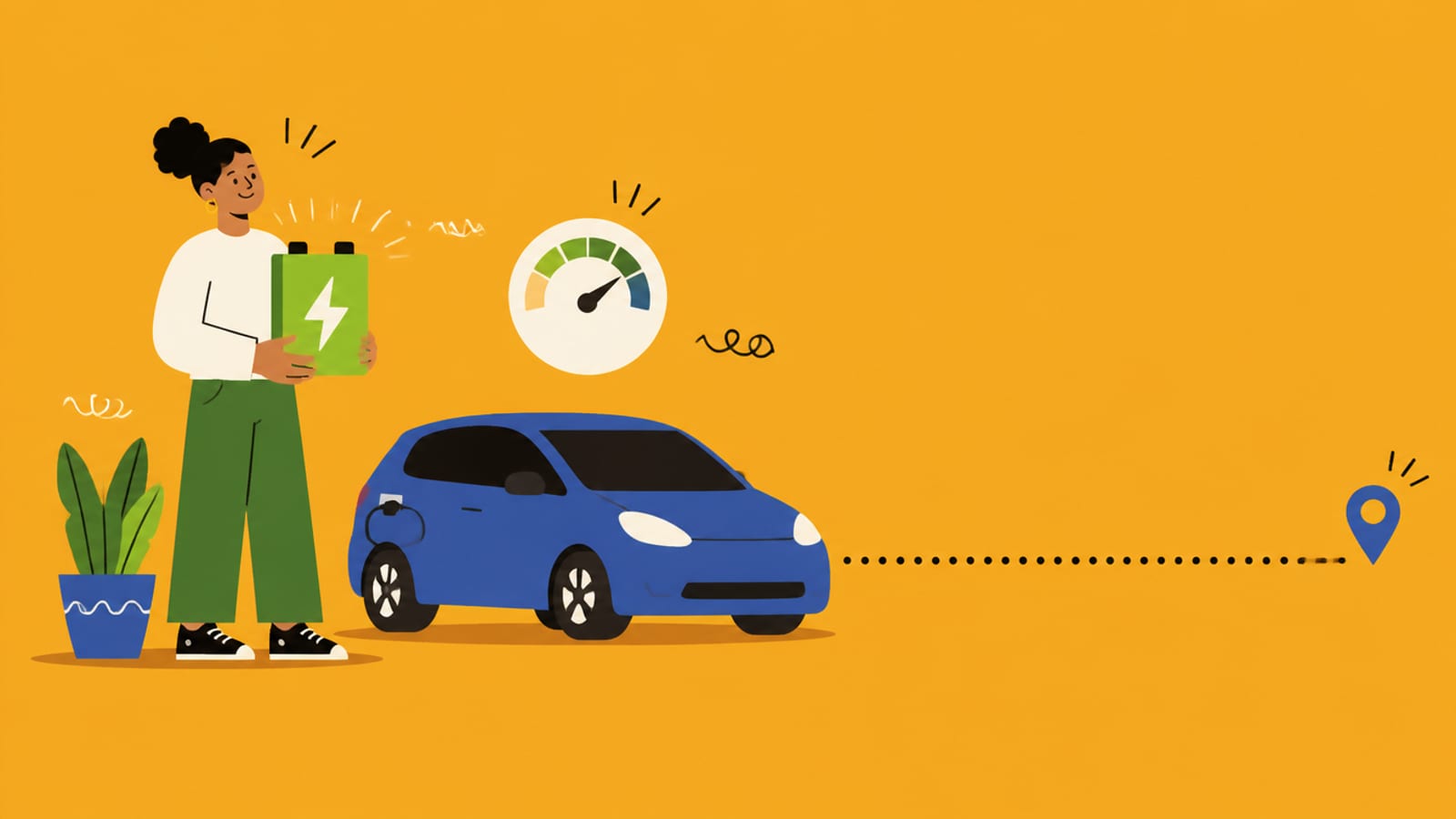
The real breakthrough is energy density — roughly double today's batteries. The '2,000 km' number is the hype. Illustration by Aliteq. · Illustration by Aliteq / generated with Higgsfield
What a solid-state battery actually is
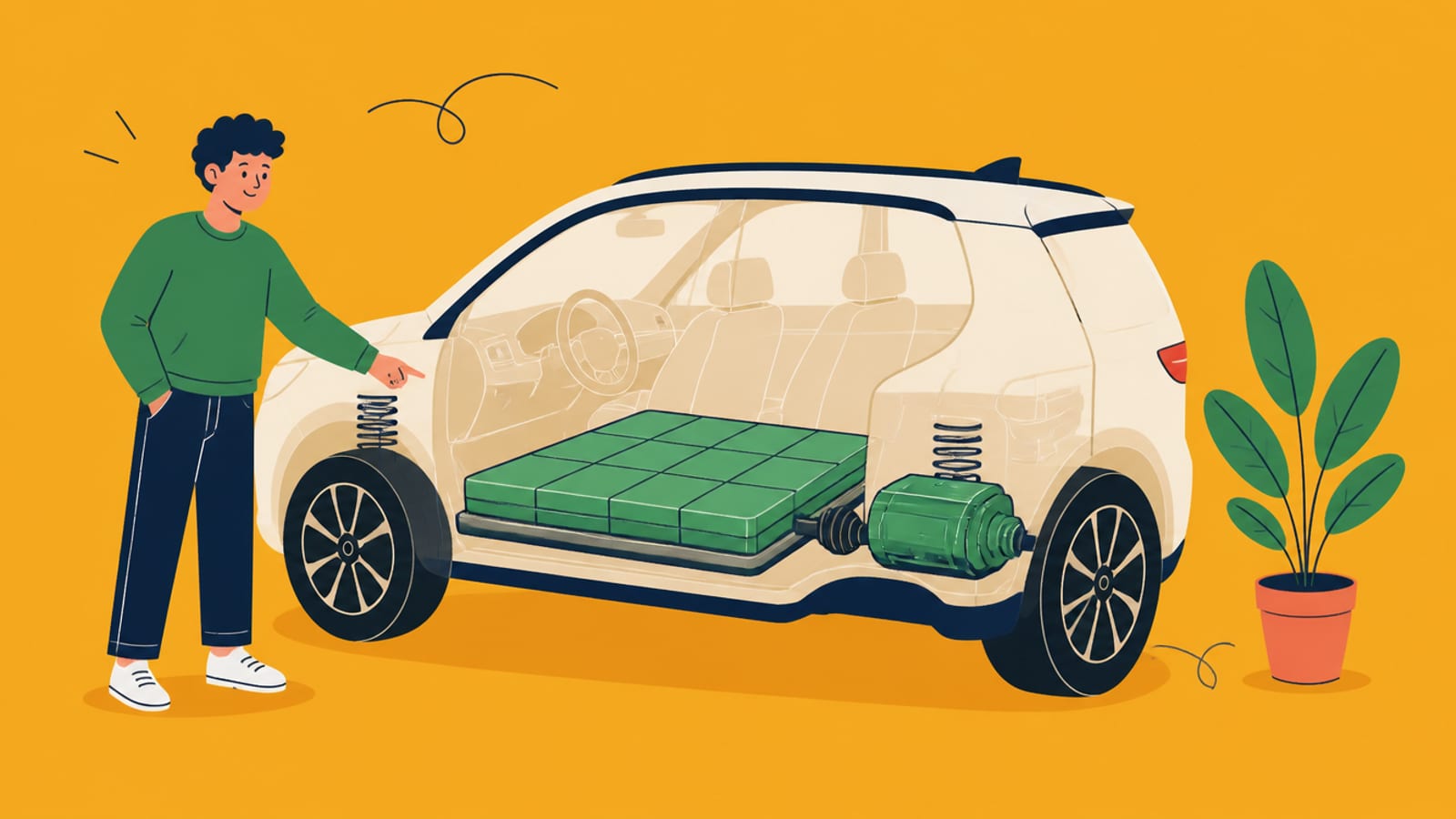
Today's lithium-ion battery moves ions through a liquid electrolyte. A solid-state battery replaces that liquid with a solid one. That sounds like a small swap; it isn't. The solid electrolyte is more stable (the liquid is flammable, which is why current batteries occasionally make the news), and it lets engineers use higher-energy materials — so you can pack more energy into the same weight and volume. That density jump, from roughly 250–300 Wh/kg today toward 400–500 Wh/kg, is the whole reason anyone cares. 'Semi-solid' batteries are a halfway step already shipping, using a gel-like electrolyte to get part of the benefit sooner.
Energy density: why this matters (Wh/kg)
Today's lithium-ion~250–300
the current EV standard
Semi-solid (shipping now)~400
the halfway step, e.g. NIO
Solid-state (2026 targets)~400–500
roughly double today
Solid-state (2030 goal)~500–600
aspirational
Double the energy density buys you a genuine choice: the same-size pack that goes much further, or a much lighter pack for the same range (which makes the whole car better). Add faster charging and improved safety, and you can see why every major automaker and battery maker is pouring money in. This part is not hype — it's real, measurable progress arriving roughly on schedule in the lab.
So where does '2,000 km' come from?
Mostly from optimistic extrapolation. The credible near-term numbers are around 1,000–1,200 km: Toyota's public target is roughly 1,200 km on a charge with a 10-minute 10–80% top-up, and NIO has already driven a car about 1,070 km on a 150 kWh semi-solid pack. Those are spectacular — nearly double today's long-range EVs — and they're real. '2,000 km' generally comes from a specific lab cell, a best-case spec sheet, or a press release doing some heavy lifting, not from a car you'll be able to buy. The rule of thumb: halve the headline range number and you're usually near the honest production figure.
Who's actually close
Solid-state timelines (as of 2026)
Toyota
Status
Production approval (2025); premium first
Realistic timeline
First EV ~2027–2028, limited
QuantumScape (with VW PowerCo)
Status
Strong B-sample cells
Realistic timeline
Small-batch ~2027, broader 2029–2030
CATL
Status
Semi-solid ~500 Wh/kg dual-track
Realistic timeline
Semi-solid mass-production push ~late 2026
All-solid in customer cars
Status
None yet
Realistic timeline
Later this decade, gradually
Status
Realistic timeline
Toyota
Production approval (2025); premium first
First EV ~2027–2028, limited
QuantumScape (with VW PowerCo)
Strong B-sample cells
Small-batch ~2027, broader 2029–2030
CATL
Semi-solid ~500 Wh/kg dual-track
Semi-solid mass-production push ~late 2026
All-solid in customer cars
None yet
Later this decade, gradually
Quick answers
Will EVs really get 2,000 km of range?
Not in the near term. The credible production targets are around 1,000–1,200 km (Toyota targets ~1,200 km; NIO's semi-solid pack has done ~1,070 km). '2,000 km' comes from lab cells or optimistic spec sheets, not cars you can buy. Halve the headline and you're usually near the honest figure.
What makes solid-state batteries better?
They replace the flammable liquid electrolyte with a solid one, which is safer and allows higher-energy materials — roughly doubling energy density (from ~250–300 to ~400–500 Wh/kg). That means more range or less weight, plus faster charging and better safety.
When can I buy a solid-state EV?
Gradually, later this decade. Toyota got production approval in 2025 and targets a first solid-state EV around 2027–2028, initially premium and limited; QuantumScape (via VW) and CATL are on similar 2027–2030 tracks. As of 2026, no all-solid cells are in customer cars yet.
Is this just hype?
The technology is real and progressing; the specific miracle numbers are often hype. Energy density really is roughly doubling, but the lab-to-factory leap keeps adding years, and nobody has shipped all-solid cells in cars despite ~$10B invested. Be excited about the tech, skeptical about the timelines and the biggest range claims.